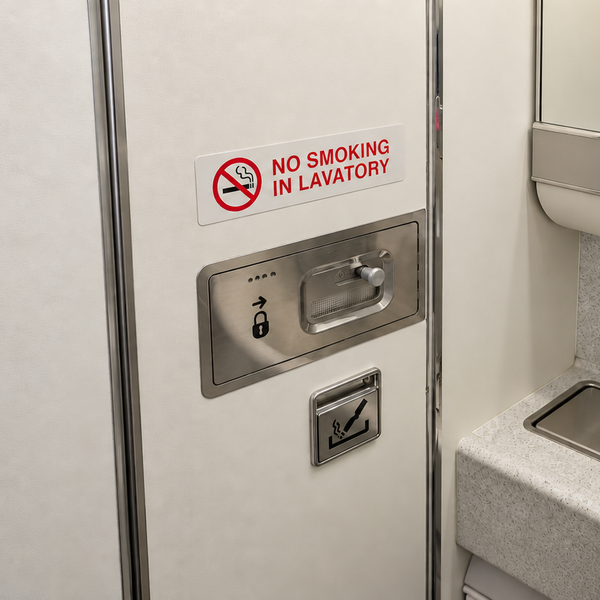



Air travel is full of small details passengers may notice only for a moment. The seatbelt sign above the seat, the tray table latch, the tiny hole in the window, and the no-smoking sign inside the cabin all feel like normal parts of flying.
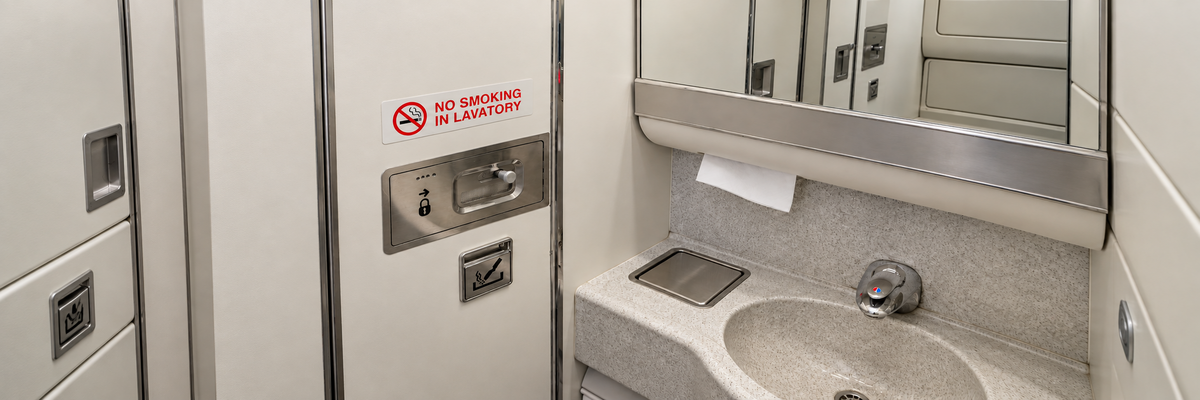
But one detail can still feel out of place: the ashtray near the aircraft lavatory.
Smoking is no longer part of the modern passenger flight experience. The rule is clear, and lighting a cigarette on board is not allowed. So when an ashtray is still visible on an aircraft, it naturally raises a question: why would a plane still need one?
The answer is not about old habits or a forgotten cabin feature. Like many things in aviation, this small detail stayed because aircraft safety has to think beyond the ideal situation.
When Smoking Left the Cabin
There was a time when smoking on flights was part of the passenger experience. Older aircraft had smoking sections, seat-area ashtrays, and cabin rules that reflected a very different period of air travel.
That changed as passenger comfort, health awareness, and aviation safety expectations developed. Today, smoking on board is no longer treated as normal cabin behaviour, and passengers understand that it is not allowed. But removing smoking from the cabin did not remove every possible risk. Aviation still had to consider one practical question: if someone ignores the rule, where could the danger begin?
That question leads to the lavatory.
The Risk Behind the Lavatory Door
If someone tries to smoke on a plane, the lavatory is the place where they may wrongly think it can be hidden. It is enclosed, private, and away from the direct view of the crew and other passengers. The concern is not only the act of smoking. The bigger concern is what happens to the smoking material afterwards.
A passenger trying to hide it may throw it into the nearest waste bin. In an aircraft lavatory, that bin may contain paper towels, tissues, and other materials that can catch fire. Fires caused by smoking materials in lavatory paper or linen waste receptacles can create toxic smoke and may threaten aircraft safety.
So the issue is not whether smoking is allowed. It is how the aircraft reduces the risk if someone breaks the rule.
Why Aircraft Still Keep Ashtrays
Aircraft still keep ashtrays because a no-smoking rule cannot be the only layer of protection. If smoking material appears inside the lavatory, the aircraft must provide a safe and visible place to extinguish it before it ends up in a waste bin.
Aircraft certification rules require lavatories to have self-contained, removable ashtrays placed clearly on or near the entry side of each lavatory door, regardless of whether smoking is allowed elsewhere on the airplane.
This requirement works alongside the lavatory’s fire-safety design. Passenger-carrying aircraft must also have smoke detection or equivalent warning systems in lavatories, and built-in fire extinguishers for lavatory waste receptacles that discharge automatically if a fire occurs inside the receptacle.
So the ashtray is not permission to smoke, and it is not a forgotten feature from the past. It is a small backup detail kept for a situation that should never happen, but still has to be controlled if it does.
The next time you notice an ashtray near an aircraft lavatory, remember that safer flying is built through details that quietly reduce risk before it grows.
Source note: This article is based on official aviation safety material and aircraft certification requirements covering lavatory ashtrays, smoking-related fire risks, and lavatory fire protection.